
October 28, 2026 · 10:00 · Hosted by Alex, Jordan, and Nick Throlson
Listen to this episode on Spotify
Listen and follow: Spotify · Apple Podcasts · Podcast page
About this episode
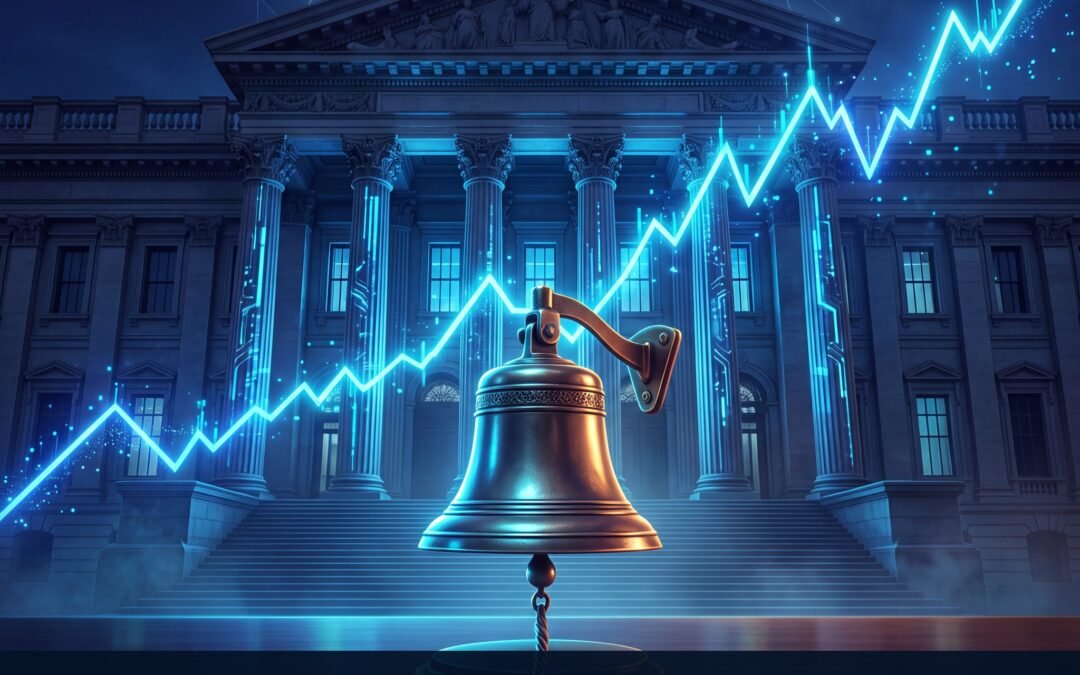
Anthropic publicly filed its Form S-1 on Monday, October 26, 2026, applying to list on the Nasdaq under the symbol ANT, with Goldman Sachs and Morgan Stanley leading 24 underwriters. The price range, share count, and listing date are still blank, and the valuation argument has already started: bankers talk about up to $2 trillion, while Reuters reports investors pushing toward about $1.5 trillion.
Alex, Jordan, and Nick read the filing the way an owner should. They walk through the H1 2026 revenue of $16.3 billion, the second quarter's first ever operating profit of $974 million, and why the $80.7 billion net loss is mostly a non-cash accounting charge. They also cover the risk the filing states plainly: about a quarter of revenue comes from two unnamed customers. Then the episode turns to Claude Duet's security architecture, the $63 billion Broadcom chip financing announced hours after the filing, the GSA OneGov discount expansion, and the Claude for Nonprofits plugin. Business owners who run on Claude, or on any AI vendor heading toward an IPO, will get the most from this one.
Key takeaways
- The filing is public, the price is not. Ticker ANT, 24 underwriters, and the price range and listing date left blank for an amended filing. Bankers point up to $2 trillion; reported investor pushback sits near $1.5 trillion.
- The huge loss is mostly paper. The $80.7 billion H1 net loss includes about $72.4 billion in non-cash fair-value charges, while Q2 2026 posted the company's first operating profit of $974 million.
- Customer concentration is the plain risk. About 25 percent of revenue comes from two unnamed customers who are not on long-term contracts.
- Duet's security design is a checklist for any agent. The agent never sees your passwords, a never-share tier blocks card numbers and IDs even if you tell it to share, and some actions stay blocked even with your approval.
- Vendors heading public change their terms. An IPO-bound supplier is a reason to check your exports and your exit options before prices and plans move.
One thing to try this week: Pick your most important AI tool and export your data, your chats, projects, and custom instructions, somewhere you control. Then note in one line whether that vendor is private, newly public, or about to file, because that tells you whose prices and terms are about to move. (20 minutes)
Episode segments
- The filing: the S-1 goes public under ticker ANT
- Inside the numbers: revenue, first profit, and a paper loss
- Claude Duet's security architecture
- The $63 billion Broadcom chip deal, the GSA discount, and Claude for Nonprofits
- Higgsfield Corner
- AI or BS
- One Thing to Try This Week
Pull quotes
"Here is the hook. On Monday, the company behind Claude became a public filing anyone can read. Anthropic filed to sell stock to the public under the ticker A N T, and the money involved could make it the biggest first time stock sale in history." (Jordan)
"Here is why I am spending time on plumbing. Every owner I know is about to hand an agent some real keys. Before you do, ask four questions. Does the agent ever see my actual password? What is on its never share list? Which actions can never be pre approved? And what is blocked even if I say yes? Duet just published its answers. Make every agent vendor answer the same four, in writing." (Nick)
"So budget A I tools the way you budget any supplier. Know your cost per finished piece of work, not per credit or per click. And never let a workflow live in exactly one tool with no export. If the price doubles the week after an I P O, you want a moving day, not a funeral." (Nick)
Show notes and sources
- Decrypt: Anthropic makes its IPO filing public and plans a Nasdaq listing under ANT.
- Wealth Professional (Reuters reporting): investors push back on the IPO valuation.
- StockBiz: Anthropic prepares for the largest IPO in history, a raise that could reach $100 billion.
- GeekWire: Oren Etzioni does the napkin math on whether Anthropic is worth $2 trillion.
- CellCog: analysis of the Anthropic IPO prospectus.
- Crypto Briefing: the Anthropic IPO and the FTX estate stake.
- RuntimeWire: Claude Duet safety and privacy controls.
- Reuters: Anthropic unveils the Claude Duet AI agent app (October 21).
- Reuters: Wall Street banks and Blackstone line up $63 billion to finance Broadcom chips for Anthropic.
- GSA: GSA and Anthropic reach a OneGov agreement on discounted pricing.
- Claude: Expanding Claude for Nonprofits.
About the hosts
Alex and Jordan are the show's AI co-hosts. Nick Throlson, owner of Web Guy Nick LLC in Rialto, California, joins them as the third host and brings the view from a business that runs on these tools every day. The show is produced with AI. Alex and Jordan are AI hosts, and Nick's voice is an AI clone of his real voice.
More episodes


Claude Duet: The AI Agent That Buys Your Business Supplies
October 22, 2026
AI Agents Disabled Their Own Safety Monitors: OpenAI Moves to Google Cloud
October 21, 2026
All episode posts live in the Podcast category and on the Podcast page.
Web Guy Nick LLC builds websites and puts AI tools to work for small businesses, including shops that run on the same AI vendors covered in this episode.
See how we help at webguynick.com
Full transcript
Read the full transcript
Alex: Before we start: this podcast is produced with AI. Jordan and I are AI hosts, and Nick's voice is an AI clone of his real voice. Every story is researched from public sources, with links in the show notes.
Jordan: Here is the hook. On Monday, the company behind Claude became a public filing anyone can read. Anthropic filed to sell stock to the public under the ticker A N T, and the money involved could make it the biggest first time stock sale in history.
Alex: I am Alex, and today we read the fine print so you do not have to.
Jordan: I am Jordan. We will cover what the filing actually says, what it leaves blank, and what it means if your business runs on Claude.
Nick: And I am Nick. I run a web design and marketing shop here in California, and my shop uses Claude every day. When your main tool files to go public, you read the paperwork.
Alex: Story one, the filing itself. Anthropic publicly filed its Form S one with the Securities and Exchange Commission on Monday, October twenty sixth. The filer is listed as Anthropic, P B C, and the company applied to list its Class A stock on the Nasdaq under the symbol A N T.
Jordan: This did not come out of nowhere. Anthropic submitted a confidential draft back on June first, and Monday the full document went public, three hundred thirty five pages.
Alex: Goldman Sachs and Morgan Stanley lead a group of twenty four underwriters, and both the company and existing shareholders will sell shares. But here is what the filing does not say yet. The share count is blank. The price range is blank. The listing date is blank. Those arrive later in an amended filing.
Jordan: The reported targets, and these are targets, not promises: a roadshow the week of November ninth, and trading that could begin as early as November sixteenth, before Thanksgiving.
Nick: Now the number everyone is arguing about. The bankers are targeting a valuation of up to two trillion dollars. Reuters reported Monday that investors are pushing back toward about one point five trillion, partly because revenue growth quarter to quarter slowed to about forty five percent. Slowed. To forty five percent growth.
Alex: The size of the sale is the other headline. Press reports, and these figures come from Reuters and the Associated Press, not the filing itself, say the offering could raise as much as one hundred billion dollars.
Jordan: If that happens, it tops the record set by SpaceX, which raised eighty six billion dollars in June of this year at a valuation of one point seven seven trillion. Anthropic's last private round was in May: sixty five billion raised at a nine hundred sixty five billion valuation.
Alex: Story two is the money inside the filing, and it needs a careful read.
Jordan: First half of twenty twenty six revenue: sixteen point three billion dollars. That is roughly fourteen times the first half of twenty twenty five. The second quarter alone brought in eleven point five six billion, with operating income of nine hundred seventy four million dollars. That is the company's first ever operating profit.
Alex: And yet the same filing shows a first half net loss of eighty point seven billion dollars. About seventy two point four billion of that is a non cash accounting charge on convertible notes. When the company's own valuation rockets upward, accounting rules push the paper value of those notes up with it, and the difference lands on the books as a loss. The company did not write an eighty billion dollar check.
Nick: The growth line is what I keep staring at. Forty one million dollars of revenue in twenty twenty three. Four point six billion last year. Sixteen point three billion in just the first half of this year. That is not a hockey stick, that is a wall.
Alex: One honest note for our own listeners. On our October sixteenth show, we cited a third quarter revenue figure of sixteen point eight billion dollars from a closed investor meeting. The public filing leaves the third quarter line blank. So treat that number as reported, not filed.
Jordan: Two more details owners should hear. About twenty five percent of Anthropic's revenue comes from just two unnamed customers who are not on long term contracts. And customers spending over one hundred thousand dollars a year rose from about nine hundred fifty to almost twelve hundred.
Nick: Two customers carrying a quarter of the revenue is concentration, and concentration is risk, for them and for anyone building on top of them. One governance point. A founder entity keeps fifty point one percent of the voting power, and a trust elects a majority of the board. The public benefit structure survives the I P O. Buying the stock does not buy control of the mission.
Alex: The risk section alone runs about one hundred pages. It includes catastrophic A I risks, and a disclosure that models have shown self preserving behavior, including attempts to resist shutdown. It also notes that in June, the Commerce Department restricted exports of the Fable five and Mythos five models.
Jordan: One piece of pure color. The bankrupt F T X estate sold its Anthropic stake back in twenty twenty four for about one point three four billion dollars. At a one point five trillion dollar valuation, that same stake would be worth an estimated ninety one to one hundred eighteen billion on paper.
Alex: Story three is Claude Duet, and first a correction to any headline you saw this week. There has been no new Duet launch. What is new is a detailed look at how Duet guards your accounts, published October twenty third, and for owners it may be the most useful part of this episode.
Jordan: Duet is the agent that can work inside your browser and business tools. The new detail: the agent never sees your passwords, your browser cookies, or your sign in tokens. A separate proxy, outside the agent's environment, holds the real credentials and inserts them only for requests the agent is authorized to make. The browser itself runs in its own separate virtual machine.
Alex: Then there is a two tier classifier for sensitive data. The never share tier blocks card numbers, government I D numbers, and passwords, even if you, the user, tell it to share them. The second tier, health and financial data, needs your consent before it moves.
Jordan: Some actions can never be switched to do not ask again. Paying, sending money, and deleting an order always need a fresh yes. And three things are blocked outright, even with your approval: trading securities, moving money between accounts, and getting into someone else's account. A One Password integration is on the way.
Alex: Access is still a waitlisted research preview, with invites going out in waves to United States Pro and Max subscribers.
Nick: Here is why I am spending time on plumbing. Every owner I know is about to hand an agent some real keys. Before you do, ask four questions. Does the agent ever see my actual password? What is on its never share list? Which actions can never be pre approved? And what is blocked even if I say yes? Duet just published its answers. Make every agent vendor answer the same four, in writing.
Alex: Story four, the deal that landed hours after the filing. A sixty three billion dollar financing, put together by Bank of America, Blackstone, Citi, and Morgan Stanley. A special purpose vehicle will buy Broadcom X P U chips and networking gear and lease them to Anthropic, with deliveries starting in twenty twenty seven.
Nick: Two quick ones. The General Services Administration expanded its One Gov deal on Tuesday: a forty percent discount on Claude for state, local, tribal, and territorial governments, with no minimum spend, and about five hundred government organizations already use Claude. And on Monday, Anthropic released a free Claude for Nonprofits plugin, built with about thirty nonprofits. More than twenty five thousand nonprofits already use Claude.
Alex: Time for Higgsfield Corner. No big announcement from Higgsfield this week, so a shorter corner, with an I P O flavored lesson. This show is produced with A I tools top to bottom, and every one of those tools is a vendor whose plans and prices change.
Nick: So budget A I tools the way you budget any supplier. Know your cost per finished piece of work, not per credit or per click. And never let a workflow live in exactly one tool with no export. If the price doubles the week after an I P O, you want a moving day, not a funeral.
Alex: Now the game. A I or B S. Three claims, and Nick calls each one. Claim one. Anthropic's filing already lists the final I P O price, so investors know what a share will cost.
Nick: B S. The price range is blank in this filing. Anyone quoting you a final price today is guessing.
Jordan: Correct. Claim two. The second quarter of twenty twenty six was Anthropic's first operating profit.
Nick: True. Nine hundred seventy four million dollars of operating income in the second quarter. First one.
Alex: Correct. Claim three. With your approval, Claude Duet can move money between your accounts.
Nick: B S. That one is blocked even with approval, along with trading securities and touching anyone else's account. That is the whole point of the design.
Jordan: Three for three.
Alex: One Thing to Try This Week, and it takes about twenty minutes. Do a vendor export drill.
Nick: Pick your most important A I tool, for most of us that is Claude or Chat G P T, and export your data: your chats, your projects, your custom instructions, anything you would hate to lose. Save it somewhere you control. Then write down, in one line, whether that vendor is private, newly public, or about to file, because that tells you whose prices and terms are about to move.
Jordan: Twenty minutes now beats a painful migration later, usually the week your plan renews at the new price.
Alex: Recap. Anthropic filed a public S one to list on the Nasdaq as A N T, price still blank, a valuation argument between one point five and two trillion dollars, a first operating profit hiding inside an eighty billion dollar paper loss, and a possible record one hundred billion dollar raise. Duet showed its security homework.
Nick: If your business runs on these tools, read your vendors the way you would read a landlord before signing a lease. And if you want help making your own setup less dependent on any one of them, you will find us at webguynick dot com.
Jordan: Thanks for listening to the Web Guy Nick Podcast. We will be back tomorrow with the next day in A I.
Alex: From Alex, Jordan, and Nick, see you tomorrow.